Welcome to this week’s edition of the “Our Future Water” newsletter.
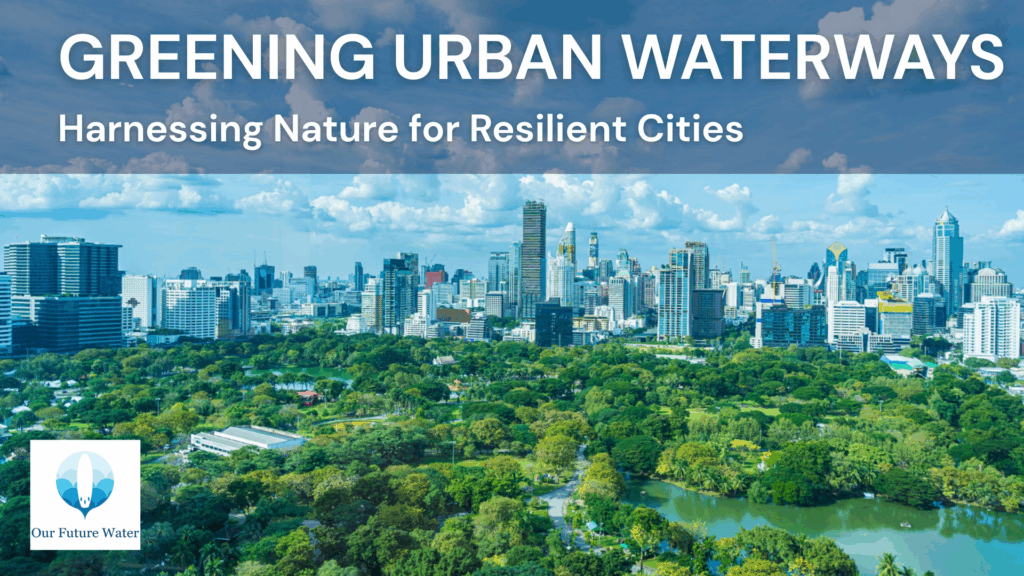
This issue explores the growing adoption of nature-based solutions (NBS) to address urban water management challenges. We spotlight the many benefits of green roofs, and showcase how wetlands and other NBS can improve water quality, mitigate flood risks, and support vibrant, climate-resilient cities. Together, these innovations highlight the potential of working with nature to build sustainable urban environments.
Insights
Green Roofs: Harnessing Nature-Based Solutions for Urban Water Management
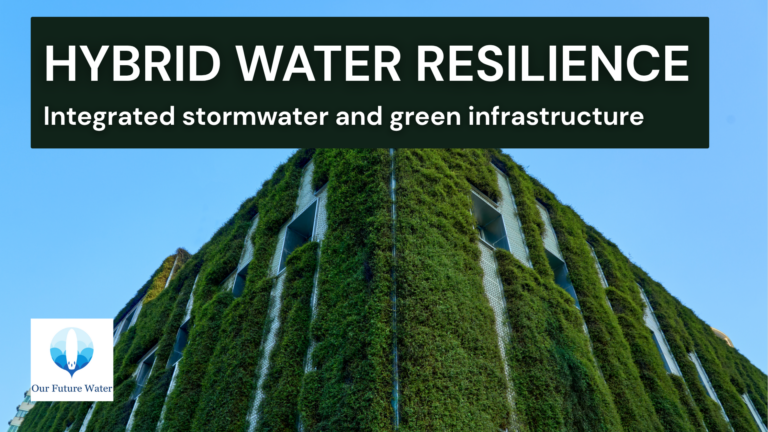
Green roofs are increasingly recognized as an effective NBS for managing water resources and reducing environmental risks. Acting as living sponges, they absorb rainwater, reduce runoff, and help prevent urban flooding. Green roofs also insulate buildings, lowering energy demand, and combat the urban heat island effect. In addition, they filter air pollutants and carbon dioxide, while supporting biodiversity by creating habitats for urban wildlife.
Beyond environmental gains, green roofs provide social and economic benefits — generating green jobs, supporting local businesses, and enhancing mental health and wellbeing for city residents. Despite these advantages, challenges remain, such as raising awareness among decision-makers and ensuring the affordability and long-term sustainability of green roof programs.
Read the full article by Robert C. Brears to see how Toronto leads the way with its Green Roof Subsidy Program and Green Roof Bylaw, providing grants and regulatory incentives to promote widespread adoption of green and cool roofs on new and existing buildings. These initiatives demonstrate how targeted policy and investment can make green roofs a cornerstone of sustainable urban water management.
Nature-Based Solutions for Water Quality and Flood Mitigation: Wetlands, Forests, and Green Infrastructure
NBS harness the inherent strengths of ecosystems — such as wetlands, forests, and rivers — to enhance water quality and reduce flood risks. By using natural processes to filter pollutants and manage runoff, NBS provide a sustainable, cost-effective alternative to traditional infrastructure.
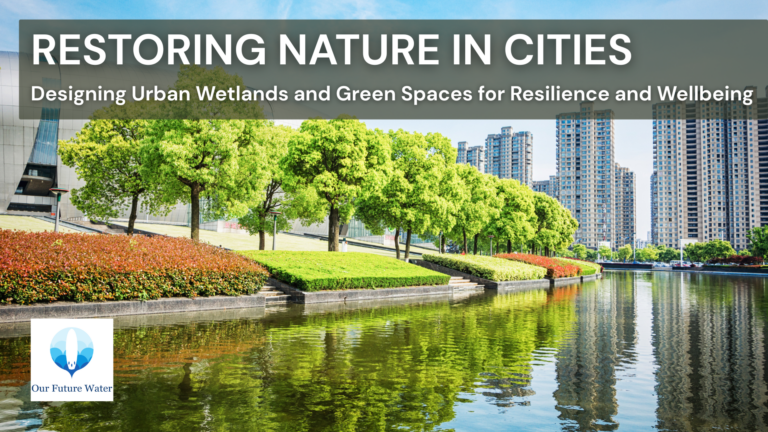
Wetlands are particularly effective at removing nutrients, sediments, and chemicals from water, while acting as natural reservoirs that absorb and store excess rainfall, reducing downstream flood peaks. Forests stabilize soils and regulate water cycles, further supporting water quality and flood resilience. In urban areas, green infrastructure — including permeable pavements, rain gardens, and green roofs — mimics natural systems, curbing runoff and enhancing biodiversity.
Read the full article by Robert C. Brears for a deep dive into Melbourne’s Trin Warren Tam-boore wetland project — a multi-pond system that treats stormwater, reduces pollutant loads, supplies irrigation, and provides valuable habitat and recreation for the community. This award-winning initiative highlights the potential of NBS to deliver water security, ecosystem services, and urban livability.
Key Takeaways
Green roofs and broader NBS are crucial for building sustainable and resilient cities. By investing in and mainstreaming NBS, urban areas can enhance water quality, reduce flood risks, boost biodiversity, and create healthier, more livable environments for all.
Stay informed. Stay resilient.
Stay Connected & Gain Exclusive Water Insights
🔹 Want in-depth Middle East water insights? 👉 Subscribe to the Middle East Water Tech Brief for exclusive analysis on desalination, AI innovations, mega-projects, and climate-resilient water investments.
🔹 Join the movement! 🌍 Become a member of the Our Future Water Network and connect with global water leaders shaping the future.
🔹 Join the conversation in the following LinkedIn groups:
Urban Water Security, Our Future Water, Circular Water Economy, Blue-Green Infrastructure, Nature-Based Solutions, Climate Resilient Water Resources Management, Water Governance, Global Climate Solutions, Nature-Based Water Management
📚 New Book Titles on Green Roofs, Nature-Based Solutions & Urban Water Resilience
📚 Green Roofs: A Comprehensive Guide to Green Roofs
📚 Nature-Based Solutions for Water Security: Sustainable Strategies for Climate Resilience, Ecosystem Restoration, and Resource Management
📚 Wetlands as Nature-Based Solutions: Protecting Wetland Ecosystems for Climate Resilience, Water Management, Biodiversity Conservation, and Sustainable Development Worldwide
📚 Shape the Future of Sustainability: Contribute to Springer Nature’s Landmark Publications
As Editor-in-Chief, Robert C. Brears invites experts, researchers, and practitioners to contribute to impactful and forward-thinking publications from Springer Nature. These comprehensive Handbooks and Encyclopedias explore Nature-Based Solutions, sustainable resource management, ecosystem well-being, and the global energy transition.
- Palgrave Handbook of Nature-Based Solutions
- Palgrave Encyclopedia of Sustainable Resources and Ecosystem Resilience
- Palgrave Handbook of Ecosystems and Human Well-Being
- Palgrave Handbook of Energy Transition and Renewable Energy
- Palgrave Handbook of Urban Climate and Disaster Resilience
- Palgrave Handbook of Social Transformations in Science, Innovation, and Education
📚 Shape the Future of Climate Resilience: Contribute to Palgrave’s Pivot Series
As Series Editor, Robert C. Brears invites experts to contribute to Palgrave Studies in Climate Resilient Societies, a leading Pivot series (25,000–50,000 words) exploring climate resilience, policy innovation, and sustainability strategies.
📩 For more details, visit: Seeking Authors — Palgrave Studies in Climate Resilient Societies