
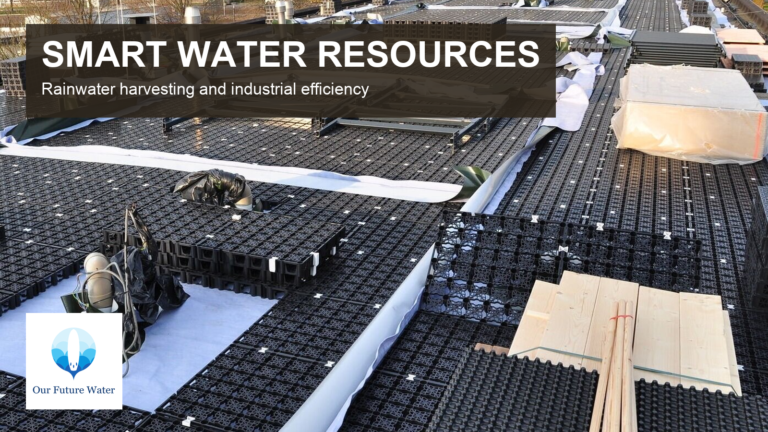
Smart Rainwater Harvesting and Industrial Resource Efficiency
How smart rainwater storage and coordinated industrial resource management connect water, urban resilience, energy and materials, with Amsterdam and HYBRIT examples.
Read insightAnalysis on adaptive water systems, infrastructure resilience, climate risk, and the governance needed to withstand shocks and stresses.
Climate resilience refers to the capacity of systems, institutions, and communities to anticipate, withstand, adapt to, and recover from climate-related shocks and stresses. In the context of water systems, resilience is shaped by the ability to manage variability in precipitation, temperature, and extreme events while maintaining reliable service delivery and protecting environmental resources.
Operationally, climate resilience is embedded through infrastructure design, adaptive management strategies, and governance mechanisms that account for uncertainty. This includes flexible water allocation systems, diversified supply sources such as desalination and reuse, and nature-based solutions that enhance natural buffering capacity. Data-driven approaches, including climate modelling and risk assessment, enable proactive planning and reduce exposure to future shocks.
The significance of climate resilience extends across sectors. Water systems are central to agriculture, energy, and urban services, meaning that disruptions can cascade through entire economies. Strengthening resilience therefore requires coordinated action across policy, finance, and infrastructure, ensuring that systems are not only robust under current conditions but capable of evolving as climate risks intensify.
Adaptive systems can respond to shifting rainfall, temperature, drought, and flood conditions.
Resilient infrastructure supports reliable service delivery during shocks and stresses.
Risk-informed planning lowers vulnerability across utilities, communities, and economies.
Climate Resilience is no longer only a technical concern. It is a strategic issue shaping investment, planning, infrastructure, governance, and climate adaptation.
Decision-makers require integrated approaches that combine policy, finance, data, institutional capacity, and practical implementation.
How smart rainwater storage and coordinated industrial resource management connect water, urban resilience, energy and materials, with Amsterdam and HYBRIT examples.
Read insight
Urban agriculture and nature-based planning can connect stormwater management, local food access, cooler streets and healthier ecosystems when cities plan and maintain them as infrastructure.
Read insight
Executive Summary: Climate resilient water management requires expanding available water resources while improving the intelligence of water system operations. Alternative water supplies and digital water technologies provide complementary…
Read insight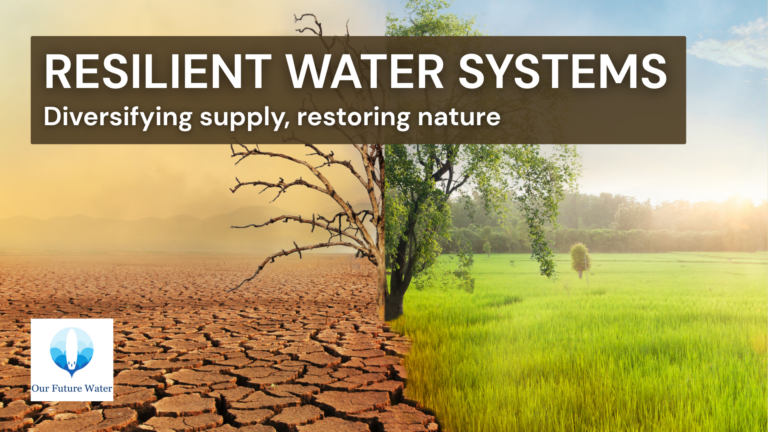
Executive Summary: Climate change is increasing pressure on the reliability, quality, and governance of water resources, requiring infrastructure systems that strengthen resilience across multiple fronts. Integrating alternative water…
Read insight
Executive Summary: Urban water resilience increasingly depends on how cities integrate energy systems, infrastructure planning, and operational governance. Renewable energy within utilities and integrated urban efficiency frameworks are…
Read insight
Executive Summary: Blended finance structures are increasingly used to mobilize capital for water infrastructure projects that face high upfront costs, long repayment periods, and complex revenue risks. By…
Read insight
Traditionally, the ocean economy is viewed solely as a mechanism for economic growth. In this business-as-usual approach, large-scale industrial economies have developed the ocean economy through the exploitation.
The effects of climate change are beginning to impact water quantity and water quality across the globe. However, there is no single action or strategy that any government.
Financing Water Security and Green Growth offers a comprehensive overview of the innovative financial instruments and approaches available to implement water security and green growth initiatives at various scales.
Climate resilience matters because water systems must continue operating through droughts, floods, shifting rainfall, heat, infrastructure stress, and cascading risks across food, energy, cities, and industry.
Our Future Water connects analysis, related insights, publications, and advisory expertise around climate resilience as part of a broader water security and climate resilience knowledge system.
This topic hub links to related Our Future Water articles, relevant books, advisory pathways, and Water Intelligence Brief for wider policy, investment, infrastructure, and sector-risk intelligence.
Our Future Water provides advisory support on water governance, climate resilience, climate finance, and sustainable infrastructure.
Water Intelligence Brief delivers structured regional and industry intelligence on policy, infrastructure investment, technology, desalination, and water risk.