Welcome to this week’s edition of the “Our Future Water” newsletter.
This issue explores how nature-based solutions (NBS) and blue-green infrastructure (BGI) are reshaping urban environments to build climate resilience and improve quality of life. We spotlight strategies for greening cities, restoring ecosystems, and integrating water into urban design, with case studies from Melbourne and San Francisco showing how these approaches deliver environmental, economic, and social benefits.
Insights
Urban Nature-Based Solutions: Greening Cities for Resilience and Wellbeing
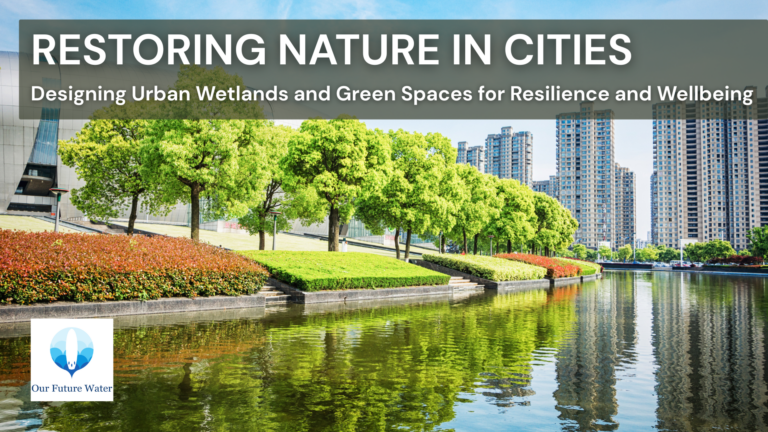
Urban NBS harness the power of ecosystems to address challenges like water management, biodiversity loss, and climate impacts. By incorporating elements such as green roofs, parks, community gardens, restored waterways, and urban forests, NBS provide multiple benefits—stormwater management, air purification, carbon sequestration, and enhanced biodiversity—while also improving mental health, recreation, and social cohesion.
Nature-inclusive design takes this further by embedding ecological features into buildings and streetscapes, creating habitat corridors and green spaces that foster community pride and environmental stewardship. Together, these initiatives transform cities into greener, healthier, and more resilient environments.
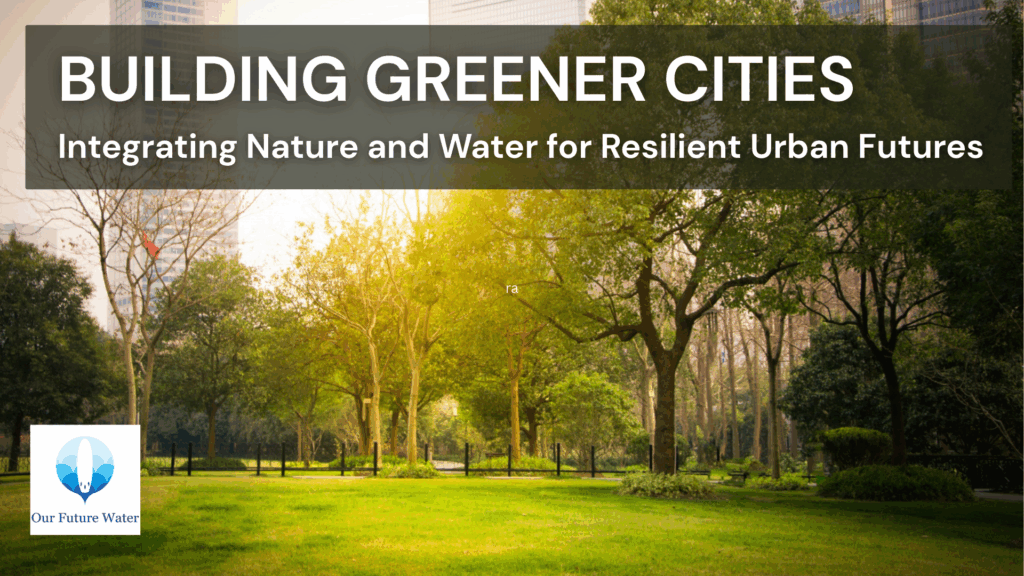
Read the full article by Robert C. Brears to see how Melbourne’s Urban Forest Strategy is increasing canopy cover, diversifying tree species, and greening laneways. Through annual tree planting, community engagement, and dedicated financing, Melbourne demonstrates how NBS can adapt cities to climate change while improving urban livability.
Blue-Green Infrastructure: Integrating Water and Nature for Urban Sustainability
BGI blends natural and semi-natural systems—such as wetlands, rain gardens, parks, and green roofs—into urban planning to manage stormwater and deliver wide-ranging co-benefits. By absorbing, filtering, and reusing water, BGI reduces flooding risks and water pollution, while also cooling cities, improving air quality, and enhancing biodiversity.
Economic advantages include energy savings from green roofs and walls, higher property values, and reduced reliance on costly grey infrastructure. Socially, BGI improves equity by providing green spaces in underserved communities, fosters education and awareness, and supports job creation in environmental management and maintenance.
Read the full article by Robert C. Brears to discover how the San Francisco Public Utilities Commission’s Green Infrastructure Grant Program ensures funded projects deliver multiple community benefits, from environmental justice and public access to job training and biodiversity support. This comprehensive approach makes BGI a key driver of resilient and inclusive urban futures.
Key Takeaways
Urban NBS and BGI are powerful tools for creating sustainable, resilient cities. By restoring ecosystems, integrating water and green systems into urban design, and ensuring projects deliver social, economic, and environmental co-benefits, cities can adapt to climate change while fostering healthier, more vibrant communities.
Stay informed. Stay resilient.
🌍 Water-Food Nexus Online Webinars: Build Skills for a Circular, Sustainable Future
Join our Water-Food Nexus online webinars to gain practical skills, innovative insights, and strategies for building sustainable, circular water and food systems.
- Foundations of the Water-Food Nexus and Systems Thinking: Learn the basics of interconnected water-food systems through systems thinking.
- Design and Technology for Sustainable Water-Food Systems: Explore design principles and technologies shaping circular solutions.
- Nature-Based Solutions and Agricultural Water Circularity: Understand NBS and circular practices for resilient agriculture.
- Financing and Scaling Circular Water-Food Systems: Gain insights into funding and scaling sustainable water-food innovations.
Newly Published: Circular Economy and Liveable Cities (Cambridge University Press)
The Circular Economy and Liveable Cities, edited by Robert C. Brears, Our Future Water, has been published. This essential guide delivers actionable strategies and best practices for implementing circular economy, climate resilience, and sustainability in urban environments, with global examples from leading cities like Tokyo, New York, and Singapore to help planners, policymakers, and researchers build liveable and sustainable cities for the future.
📘 Coming Soon — 2nd Edition of Nature-Based Solutions to 21st Century Challenges (Routledge)
Fully revised and updated, the second edition of Nature-Based Solutions to 21st Century Challenges by Robert C. Brears offers a timely and systematic review of how working with nature can address today’s most pressing environmental and societal issues. Featuring new case studies from across the globe, expanded insights on public policy, AI, and community-led initiatives, this edition is essential reading for anyone shaping a sustainable future.
📚 New Book Titles on Urban Nature and Blue-Green Infrastructure
📚 Urban Nature-Based Solutions: Innovative strategies for climate resilience, biodiversity, and sustainable cities.
📚 Urban Green Spaces for Climate Resilience: Designing sustainable cities with green infrastructure and biodiversity.
📚 Nature-Based Solutions for Cities: Urban planning with green infrastructure, resilience, and sustainable development.
📚 Shape the Future of Sustainability: Contribute to Springer Nature’s Landmark Publications
As Editor-in-Chief, Robert C. Brears invites experts, researchers, and practitioners to contribute to impactful and forward-thinking publications from Springer Nature. These comprehensive Handbooks and Encyclopedias explore Nature-Based Solutions, sustainable resource management, ecosystem well-being, and the global energy transition.
- Palgrave Handbook of Nature-Based Solutions
- Palgrave Encyclopedia of Sustainable Resources and Ecosystem Resilience
- Palgrave Handbook of Ecosystems and Human Well-Being
- Palgrave Handbook of Energy Transition and Renewable Energy
- Palgrave Handbook of Urban Climate and Disaster Resilience
- Palgrave Handbook of Social Transformations in Science, Innovation, and Education
📚 Shape the Future of Climate Resilience: Contribute to Palgrave’s Pivot Series
As Series Editor, Robert C. Brears invites experts to contribute to Palgrave Studies in Climate Resilient Societies, a leading Pivot series (25,000–50,000 words) exploring climate resilience, policy innovation, and sustainability strategies.
📩 For more details, visit: Seeking Authors — Palgrave Studies in Climate Resilient Societies