Executive Summary: Urban flood management is increasingly being treated as critical risk mitigation infrastructure as cities face more frequent and severe rainfall events linked to climate change. The strategic issue is no longer limited to drainage capacity, but to how urban systems reduce economic disruption, protect vulnerable populations, and maintain infrastructure continuity. Integrated flood management combining engineered systems, land-use planning, and nature-based solutions strengthens climate resilience while improving long-term asset performance and investment certainty.
In simple terms: Urban flood management reduces climate-related risks by combining infrastructure, planning, and water management to protect cities from disruptive flooding.
This analysis reflects how governments, utilities, and infrastructure planners structure urban flood management to balance resilience, economic continuity, and long-term public safety.
Urban flood management is becoming a core component of both Climate Resilience and Water Security strategies as cities confront increasing exposure to stormwater overload, infrastructure failure, and surface flooding. The wider implication is that flood systems must now operate as integrated resilience assets rather than isolated drainage networks.
The Strategic Imperative
The strategic issue is that urban flooding increasingly generates cascading impacts across transport systems, utilities, housing, public health, and local economies. In practice, conventional drainage infrastructure designed for historic rainfall patterns is often unable to manage the intensity and frequency of current climate-driven precipitation events. This matters because flood-related disruptions impose rising costs on municipalities, insurers, businesses, and residents. Urban flood management therefore functions as risk mitigation infrastructure that protects economic productivity and critical services while reducing long-term recovery costs. When designed well, integrated flood systems combine grey infrastructure, green infrastructure, spatial planning, and digital monitoring to improve adaptive capacity while supporting broader climate resilience objectives across rapidly urbanizing regions.
Integrated Flood Risk Management Mechanisms
Effective flood resilience depends on combining multiple infrastructure and governance mechanisms.
- Stormwater Retention Systems: Detention basins, underground storage, and retention ponds temporarily capture excess runoff to reduce peak flow pressures on drainage networks.
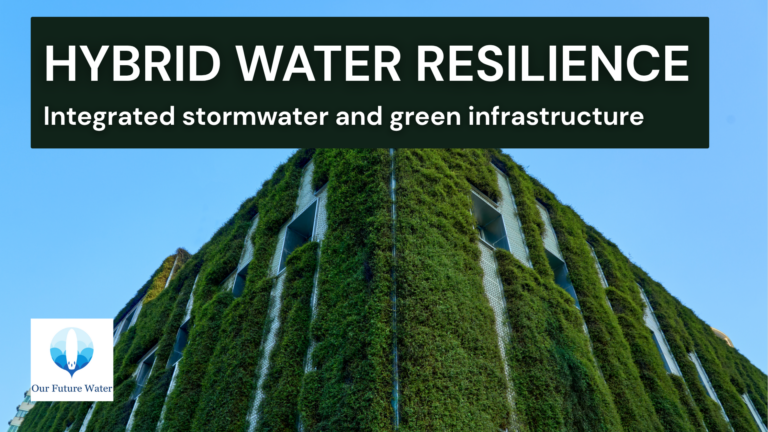
- Nature-Based Infrastructure: Permeable surfaces, urban wetlands, bioswales, and green corridors improve infiltration while reducing surface runoff and urban heat stress.
- Smart Flood Monitoring: Digital sensors, predictive analytics, and real-time rainfall monitoring improve operational response and asset management during high-risk weather events.
- Land-Use Planning Controls: Floodplain zoning, building regulations, and integrated urban planning reduce long-term exposure to flood-prone development areas.
Key Insight: Urban flood management delivers the greatest resilience value when infrastructure planning, stormwater governance, and climate adaptation policies are integrated into a single risk management framework across the entire urban watershed.
Governance, Equity, and Cost Recovery
The challenge is that flood risk exposure is often unevenly distributed across urban populations, with lower-income communities frequently facing the highest vulnerability due to inadequate infrastructure and limited adaptive capacity. Effective governance therefore requires coordinated planning across municipal agencies, utilities, emergency management authorities, and private developers. Cost recovery mechanisms such as stormwater fees, resilience bonds, and blended climate finance increasingly support long-term investment while distributing costs more transparently. This matters because underfunded flood systems create escalating liabilities for cities and investors. When designed well, governance frameworks align infrastructure investment with social equity objectives, ensuring that resilience improvements strengthen both system reliability and community protection.
| Dimension | Strategic Impact & Outcome |
|---|---|
| Resilience | Reduces disruption to critical infrastructure, transportation networks, and urban economic activity during extreme rainfall events. |
| Governance | Strengthens cross-agency coordination, risk accountability, and integrated watershed management across urban jurisdictions. |
| Investment | Improves long-term infrastructure performance while lowering future disaster recovery costs and climate-related financial exposure. |
Infrastructure modernization increasingly depends on combining physical upgrades with digital technologies and adaptive financing mechanisms. In practice, predictive maintenance systems, hydrological modeling, and climate risk mapping improve infrastructure prioritization and operational efficiency. The wider implication is that flood resilience investments are now evaluated not only through engineering performance, but through their ability to support economic continuity and reduce systemic risk exposure. Climate finance institutions and insurers are also placing greater emphasis on measurable resilience outcomes when assessing urban infrastructure projects. This creates stronger incentives for municipalities to integrate flood mitigation into broader urban development and climate adaptation strategies.
Decision-Maker Application
- Prioritize Integrated Planning: Align flood management with transport, housing, energy, and land-use planning to reduce fragmented infrastructure investment.
- Expand Resilience Financing: Develop funding mechanisms that support long-term maintenance, asset renewal, and equitable resilience upgrades across vulnerable communities.
- Strengthen Data-Driven Operations: Deploy monitoring technologies and predictive analytics to improve emergency preparedness and optimize stormwater system performance.
Strategic Context
- Primary Focus: Climate resilience through urban flood management infrastructure.
- Core Mechanism: Integrated stormwater management combining engineered systems, nature-based solutions, and adaptive governance.
- Global Relevance: Increasing urbanization and climate-driven rainfall intensity are expanding flood-related economic and infrastructure risks worldwide.
Conclusion
Urban flood management is increasingly recognized as essential risk mitigation infrastructure within climate resilience planning. The strategic issue is not solely flood prevention, but maintaining urban functionality, protecting infrastructure assets, and reducing long-term economic disruption under changing climate conditions. Effective systems integrate engineering, governance, finance, and land-use planning to improve adaptive capacity across entire urban watersheds. This matters because fragmented approaches create higher recovery costs and greater exposure to systemic infrastructure failure. For policymakers, utilities, and investors, the wider implication is clear: resilient urban flood management must be embedded into long-term infrastructure strategies to strengthen both climate adaptation and economic stability.
Key Questions
Why is urban flood management considered critical infrastructure?
Urban flood management protects transportation systems, utilities, housing, and economic activity from climate-related flooding disruptions. As rainfall intensity increases, flood infrastructure functions as a risk mitigation system that supports public safety, operational continuity, and long-term urban resilience.
How do nature-based solutions support urban flood resilience?
Nature-based solutions such as wetlands, bioswales, permeable pavements, and green corridors improve water infiltration and reduce surface runoff. These systems help lower pressure on drainage infrastructure while also supporting urban cooling, biodiversity, and water quality objectives.
What role does governance play in flood risk management?
Effective governance aligns municipalities, utilities, emergency services, planners, and private developers within a coordinated flood resilience strategy. Integrated governance improves investment prioritization, infrastructure maintenance, land-use regulation, and emergency response capabilities.
Why are traditional drainage systems becoming less effective?
Many conventional drainage systems were designed using historical rainfall data that no longer reflects current climate conditions. More intense and frequent storms can exceed system capacity, increasing the risk of urban flooding, infrastructure damage, and economic disruption.
How can cities finance urban flood resilience infrastructure?
Cities increasingly use blended financing models that combine public investment, climate finance, resilience bonds, stormwater fees, and private sector participation. These mechanisms support long-term infrastructure upgrades while improving financial resilience against future flood-related losses.
What is the strategic value of smart flood monitoring systems?
Smart monitoring systems use sensors, predictive analytics, and real-time data to improve flood forecasting and operational response. This helps utilities and municipalities optimize infrastructure performance, reduce emergency response times, and improve long-term asset management.