Executive Summary: Urban stormwater systems are under increasing pressure from climate variability, population growth, and aging centralized infrastructure. Hybrid green-grey systems and Nature-Based Solutions are emerging as critical components of urban water governance because they distribute stormwater management functions across landscapes while improving resilience, environmental performance, and long-term infrastructure efficiency. The strategic implication is that cities integrating ecological infrastructure into planning and investment frameworks are better positioned to manage flood risk, control infrastructure costs, and strengthen urban sustainability outcomes.
In simple terms: Cities are combining engineered drainage systems with natural infrastructure to improve stormwater management, resilience, and long-term urban sustainability.
This analysis reflects how urban governments, utilities, and infrastructure planners structure stormwater systems to balance resilience, cost efficiency, and environmental performance.
Integrated stormwater management is becoming a core component of Water Security and Nature-Based Solutions strategies as cities seek to reduce flood exposure while improving long-term infrastructure resilience. Distributed ecological infrastructure is increasingly embedded into planning frameworks to strengthen urban adaptation capacity and reduce pressure on centralized drainage systems.
The Strategic Imperative
The strategic issue is that conventional centralized stormwater systems are increasingly unable to manage the combined impacts of urban expansion, impermeable surfaces, and climate-driven rainfall variability. In practice, urban flooding, combined sewer overflows, and infrastructure stress are creating rising operational and capital costs for municipalities and utilities. Hybrid green-grey systems and Nature-Based Solutions address this challenge by distributing stormwater functions across urban landscapes through ecological and engineered assets operating together. This matters because decentralized retention, infiltration, and controlled conveyance improve hydraulic performance while reducing dependence on large-scale infrastructure expansion. When designed well, these systems strengthen resilience, improve water quality, support biodiversity, and align infrastructure planning with broader sustainability and climate adaptation objectives.
Distributed Ecological and Engineered Integration
Hybrid stormwater systems operate through interconnected ecological and engineered mechanisms.
- Stormwater Retention: Rain gardens, wetlands, and detention systems capture runoff and reduce peak flow volumes entering drainage networks.
- Infiltration Capacity: Vegetated landscapes and permeable surfaces improve groundwater recharge while reducing surface runoff and localized flooding risks.
- Water Quality Control: Soil filtration and biological treatment processes remove pollutants before stormwater enters waterways or sewer systems.
- Adaptive Infrastructure Management: Distributed systems improve operational flexibility by reducing stress on centralized infrastructure during extreme rainfall events.
Key Insight: Cities integrating green-grey infrastructure within urban planning frameworks are improving stormwater performance while reducing long-term infrastructure expansion pressures and strengthening climate resilience across urban catchments.
Governance, Equity, and Cost Recovery
The challenge is that hybrid stormwater systems require governance arrangements capable of coordinating utilities, municipalities, planners, and environmental agencies across multiple infrastructure functions. In practice, successful implementation depends on aligning land-use policy, stormwater regulation, asset management, and financing structures within integrated urban governance frameworks. Equity considerations are also significant because flood exposure and infrastructure deficiencies disproportionately affect vulnerable communities. When designed well, distributed Nature-Based Solutions improve environmental conditions and public health outcomes across urban areas while supporting more balanced infrastructure investment. Cost recovery mechanisms, including stormwater fees, resilience financing, and green infrastructure incentives, are increasingly used to support long-term operational sustainability and infrastructure maintenance.
| Dimension | Strategic Impact & Outcome |
|---|---|
| Resilience | Distributed stormwater systems improve flood mitigation capacity and reduce infrastructure vulnerability during extreme rainfall events. |
| Governance | Integrated planning frameworks strengthen coordination between utilities, municipalities, environmental agencies, and infrastructure operators. |
| Investment | Hybrid infrastructure reduces long-term capital expansion pressures while supporting more flexible and adaptive infrastructure financing models. |
The wider implication is that ecological infrastructure is increasingly being treated as a strategic infrastructure asset rather than a supplementary environmental measure. In practice, digital monitoring systems, climate risk assessments, and integrated asset management platforms are improving the operational performance of distributed stormwater systems. Infrastructure investment strategies are also evolving to include resilience-oriented financing mechanisms that support long-term maintenance and performance optimization. Policy frameworks that integrate stormwater regulation, urban planning, and climate adaptation are strengthening the institutional capacity required to scale Nature-Based Solutions across rapidly urbanizing environments while improving long-term infrastructure sustainability.
Decision-Maker Application
- Integrate Planning Frameworks: Align stormwater governance, land-use policy, and infrastructure investment strategies to support distributed water management systems.
- Prioritize Resilience Financing: Develop financing structures that support long-term operation, maintenance, and performance monitoring of hybrid infrastructure assets.
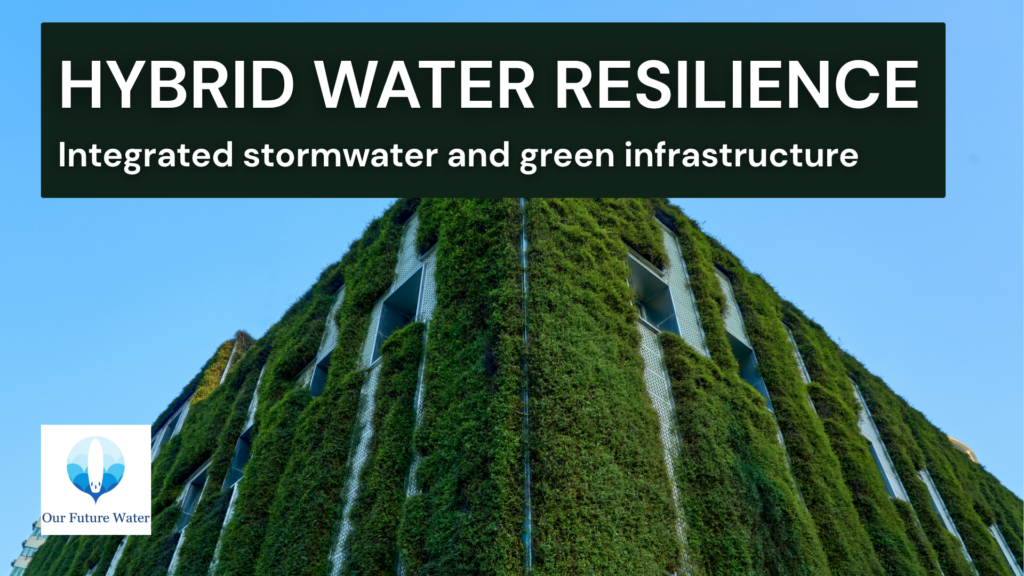
- Expand Distributed Infrastructure: Increase deployment of green roofs, wetlands, bioswales, and permeable surfaces to improve adaptive stormwater capacity across urban catchments.
Strategic Context
- Primary Focus: Hybrid stormwater systems and urban Nature-Based Solutions
- Core Mechanism: Distributed ecological and engineered infrastructure integration for adaptive urban water management
- Global Relevance: Cities worldwide are strengthening climate resilience and infrastructure sustainability through integrated stormwater governance frameworks.
Conclusion
Hybrid green-grey systems and Nature-Based Solutions are reshaping how cities manage stormwater, climate adaptation, and infrastructure resilience within increasingly complex urban environments. The strategic value of these systems lies in their ability to distribute water management functions while generating broader environmental, economic, and public health benefits. This matters because centralized infrastructure alone is unlikely to provide sufficient adaptive capacity under growing climate and urbanization pressures. Cities that integrate ecological infrastructure into governance, financing, and planning frameworks are strengthening long-term resilience while improving infrastructure efficiency, reducing flood exposure, and supporting more sustainable urban development pathways.
Key Questions
How do green-grey hybrid systems improve urban stormwater management?
Green-grey hybrid systems combine ecological infrastructure with engineered drainage assets to capture, retain, infiltrate, and regulate stormwater runoff across urban environments. This reduces pressure on centralized sewer systems while improving water quality and flood resilience.
Why are Nature-Based Solutions important for urban resilience?
Nature-Based Solutions improve urban resilience by reducing flood exposure, moderating urban heat conditions, supporting biodiversity, and strengthening climate adaptation capacity through integrated ecological infrastructure.
What are the main benefits of distributed stormwater infrastructure?
Distributed stormwater infrastructure improves runoff management, reduces infrastructure stress, enhances water quality, lowers long-term expansion costs, and strengthens the flexibility of urban water systems during extreme rainfall events.
How do hybrid stormwater systems support sustainable urban development?
Hybrid systems align infrastructure performance with environmental and social objectives by integrating water management, ecosystem health, climate resilience, and urban livability within long-term planning frameworks.
What role does governance play in implementing Nature-Based Solutions?
Effective governance coordinates utilities, municipalities, planners, and environmental agencies to integrate ecological infrastructure into policy, financing, land-use planning, and long-term asset management frameworks.
Why are cities investing more in ecological infrastructure?
Cities are investing in ecological infrastructure because it improves stormwater performance, reduces flood risks, strengthens climate resilience, and delivers environmental and public health co-benefits alongside conventional infrastructure functions.