Key Takeaways
- Reconnecting rivers to floodplains can restore temporary storage and fish refuge.
- A setback levee combines space for high flows with continued protection for occupied land.
- Energy recovery cuts electricity demand for reverse osmosis, while solar changes the power mix.
- Low-carbon desalination still depends on dependable power, distribution, and responsible brine management.
Floodplain restoration and lower-carbon desalination help water systems cope with different kinds of climate stress. Giving rivers space to spread can reduce flood exposure and restore habitat. Recovering energy from pressurized brine and using renewable electricity can reduce the power and emissions associated with desalination, an option for coastal regions where conventional freshwater supplies are limited.
How floodplain restoration changes the path of high flows
A levee built close to a river narrows the space available for water during high flows. Moving it back can reconnect low ground to the main channel, while opening side channels gives water more routes through the floodplain. The reconnection can add temporary storage and provide slower water where fish can shelter. The local effect depends on the reach’s topography, the timing of high flows, and the location of buildings and infrastructure.
A setback project needs room for the river and an enforceable plan for using that land over time. Flood modeling can identify areas that may still need protection. Monitoring can show how sediment and channel movement change the way water enters the floodplain. Maintaining the setback levee and protecting the land between it and the river are part of keeping the design functional.
Calistoga Setback Levee in Orting, Washington
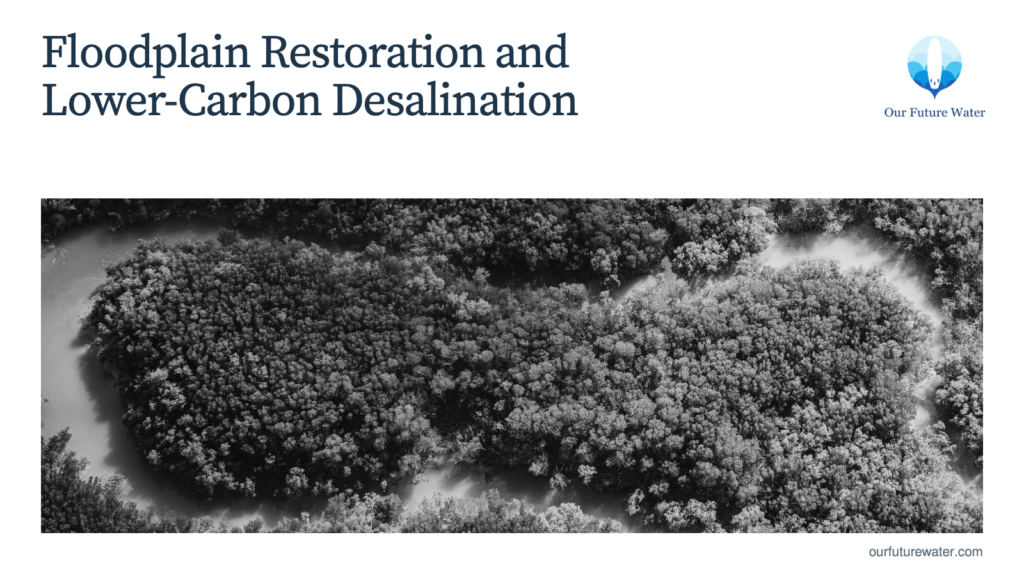
The City of Orting shifted the Calistoga levee away from the Puyallup River and improved fish access to a tributary. The project restored access to about 100 acres of floodwater storage and off-channel habitat. High flows gained room to spread, and juvenile salmon gained access to areas that can provide refuge during high water. The state’s Floodplains by Design program helped fund the work. Robert C. Brears describes the wider grant model in his article on floodplain restoration and flood risk.
Where desalination can lower its electricity footprint
Seawater reverse osmosis uses pumps to force water through membranes that retain most salts. An energy recovery device transfers some pressure from the outgoing concentrate to incoming seawater, cutting the work required of the pumps. The resulting electricity demand can then be matched with the available sources of power. On-site solar output varies by hour, so continuous water production also requires a plan for power outside generating hours.
Desalination can supplement rain-dependent sources during drought, provided the electricity and distribution systems can keep the plant and network running. Evaluation should cover dependable production as well as energy intensity and electricity emissions. The intake and brine discharge also affect the receiving environment. Cleaner power can lower operating emissions while permitting and design address those coastal impacts.
Solar generation at Sharqiyah in Sur, Oman
Veolia and TotalEnergies inaugurated a 17-megawatt-peak solar installation at the Sharqiyah Desalination Plant in 2023. Veolia projected that full-capacity generation could cover more than a third of the plant’s daily electricity consumption and avoid about 27,200 metric tons of carbon dioxide annually. These are project estimates for the solar contribution. Robert C. Brears’s article on lower-carbon desalination in arid regions places the installation alongside energy recovery and other approaches to reducing electricity use and emissions.
Plan for the conditions each asset needs to work
The two projects show why the design boundary matters. Floodplain restoration relies on land remaining available for high flows. Desalination depends on power, coastal safeguards, and the pipes that deliver water from the plant. Plans that account for those dependencies give operators and public agencies a clearer basis for assessing performance through both floods and droughts.
Key Questions
How does a setback levee reduce flood risk?
Moving a levee away from the river can open more land to high flows. This gives water space to spread and can increase temporary storage. The level of protection depends on site conditions and the design of the wider system.
How does reverse osmosis recover energy?
The stream of concentrated seawater exits the membranes under pressure. A pressure exchanger can transfer some of that energy to the incoming feed, lowering the work needed from the high-pressure pumps.
Does solar power provide all the electricity at Sharqiyah?
Veolia estimated that the solar installation could cover more than one-third of the plant’s daily electricity use at full generation capacity. The estimate describes the solar share of plant power and leaves additional demand to be supplied from other sources.