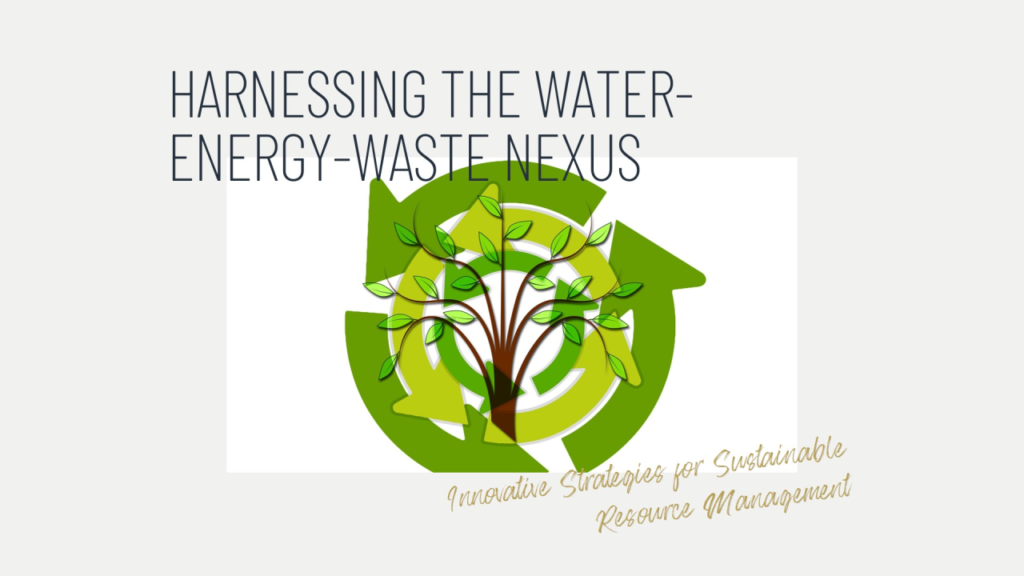
Welcome to this week’s edition of the “Our Future Water” newsletter. In this issue, we focus on Harnessing the Water-Energy-Waste Nexus. As the need for sustainable resource management becomes increasingly urgent, innovative approaches are being developed to optimize the interconnectedness of water, energy, and waste systems. Discover how cities and utilities leverage these connections to reduce waste, generate energy, and improve water management.
Insights
Co-Digestion of Food Waste and Sewage Sludge for Biogas Production
Cities are increasingly adopting co-digestion processes that combine food waste with sewage sludge in wastewater treatment plants to enhance biogas production. This innovative approach not only diverts organic waste from landfills but also boosts biogas generation. This renewable energy source can be used to power treatment facilities or injected into the natural gas grid. Utilities can maximize energy recovery from organic materials by co-digesting food waste and sewage sludge while reducing greenhouse gas emissions associated with waste disposal. Discover how Singapore’s Tuas Nexus will co-digest food waste and sewage sludge to boost biogas production, enhance energy, and cut carbon emissions.
Hydro-Turbine Systems in Wastewater Treatment Plants
Wastewater treatment plants are turning to hydro-turbine systems to generate clean energy from the water flow. By installing hydro turbines in the effluent outflow, these facilities harness the kinetic energy of water to produce electricity, reducing their reliance on external power sources and lowering operational costs. This sustainable energy generation method provides a renewable power source and complements the water treatment process, enhancing overall plant efficiency. Explore how Hong Kong’s Drainage Services Department uses hydro-turbine systems in sewage treatment plants to generate electricity and enhance sustainability.
Water Utilities Leveraging Anaerobic Digestion Expertise to Build Food Waste Plants
With their extensive expertise in anaerobic digestion, water utilities are now expanding their operations to include dedicated food waste processing plants. These facilities use anaerobic digestion technology to convert food waste into biogas, which can then be used to generate electricity for the grid. By leveraging their skills in anaerobic digestion, water utilities can create a new revenue stream, reduce reliance on fossil fuels, and contribute to a more sustainable energy future. Read how Severn Trent is expanding its food waste plants to enhance renewable energy production and achieve greater energy self-sufficiency.