Executive Summary: Modern urban water security requires shifting from subterranean pipe-and-discharge drainage to distributed hydrological infrastructure. By pairing regulatory Green Factor planning frameworks (which mandate ecological absorption metrics on private parcels) with multifunctional green infrastructure parks (which act as regional storm retention assets), municipalities create decentralized sponge networks. This dual-track strategy flattens flood hydrographs, treats urban runoff at source, mitigates urban heat island (UHI) effects, and avoids capital-intensive storm trunk expansions.
In Simple Terms: Cities protect against extreme storms by requiring developers to incorporate absorbent soils and green roofs, while converting public parks into dry-weather recreational assets that safely flood during cloudbursts.
Policy briefing for municipal water authorities, civil infrastructure planners, and urban development agencies navigating climate adaptation finance.
Urban water security is failing under the combined pressures of climate-driven cloudbursts and rapid surface imperviousness. For over a century, civil engineering relied on “grey infrastructure”—subsurface concrete conduits designed to flush stormwater out of cities as rapidly as possible. In dense metropolitan regions, this linear paradigm is obsolete: pipe expansions cannot keep pace with runoff volumes, and concentrated discharge severely degrades receiving aquatic ecosystems.
Achieving systemic urban resilience requires mainstreaming Nature-Based Solutions and integrated Climate Resilience objectives. Vegetation, engineered soils, permeable pavements, and civic retention parks must be planned, funded, and managed as foundational water utilities rather than aesthetic amenities.
The Structural Problem: The Catchment Imbalance
Urban densification alters catchment hydrology by replacing natural percolation zones with impermeable building envelopes, roadways, and hardscapes. During high-intensity precipitation events, this generates severe flash runoff, overwhelms combined sewer systems (triggering combined sewer overflows, or CSOs), and exacerbates the urban heat island effect during dry periods.
Constructing oversized storm tunnels is capital-prohibitive and hydrologically brittle. Distributed green infrastructure solves this bottleneck by managing water at the point of impact. However, municipal investments in the public right-of-way address only a fraction of urban catchments; over 60% of urban land is typically privately held. Resilience requires bridging this institutional divide through a coordinated private-public delivery framework.
The Dual-Track Policy Framework: Site Mandates & Civic Assets
1. Private-Sector Mandates: The Green Factor Mechanism
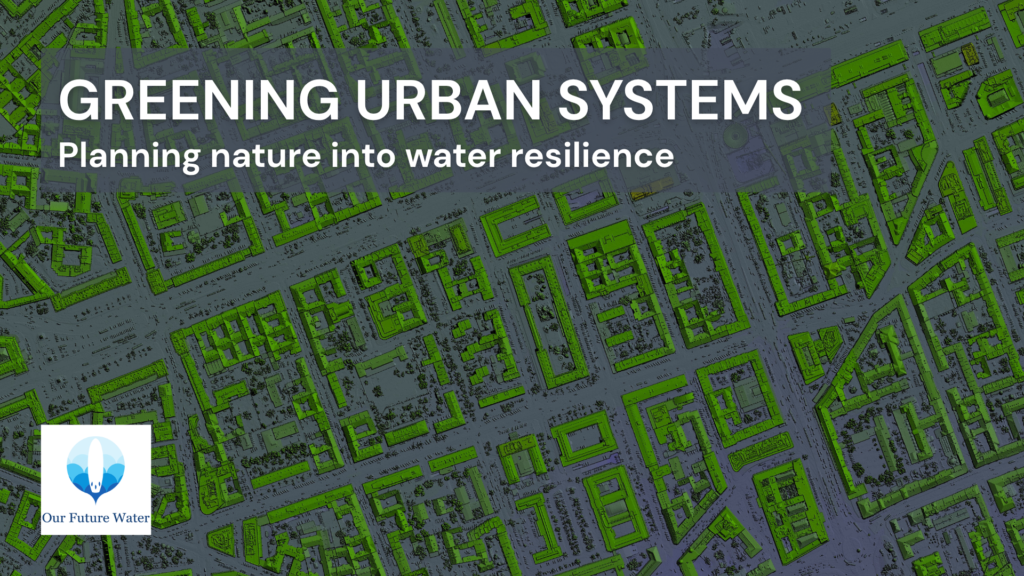
A Green Factor (also known as a Green Space Factor or Biotop Area Factor) is a municipal planning metric that establishes a minimum baseline of ecological functionality for private developments. Implemented across cities such as Berlin, Seattle, Malmö, and London, the policy requires developers to achieve a specific ecological score as a condition for building permit issuance.
- Function-Weighted Scoring: Instead of crude open-space minimums, surfaces are scored by hydrological and ecological performance. Deep native soil planting receives the highest weighting (1.0), intensive green roofs and bioswales achieve intermediate ratings (0.6–0.8), while semi-permeable paving scores lower (0.2–0.4).
- Source-Control Retention: By obligating developments to absorb, transpire, or detain rainfall within the property boundary, peak runoff entering the municipal trunk line is attenuated before reaching public mains.
- Private Capital Activation: The Green Factor shifts the upfront capital cost of localized stormwater detention from municipal balance sheets to private development budgets.
2. Public-Realm Assets: Multifunctional Sponge Parks
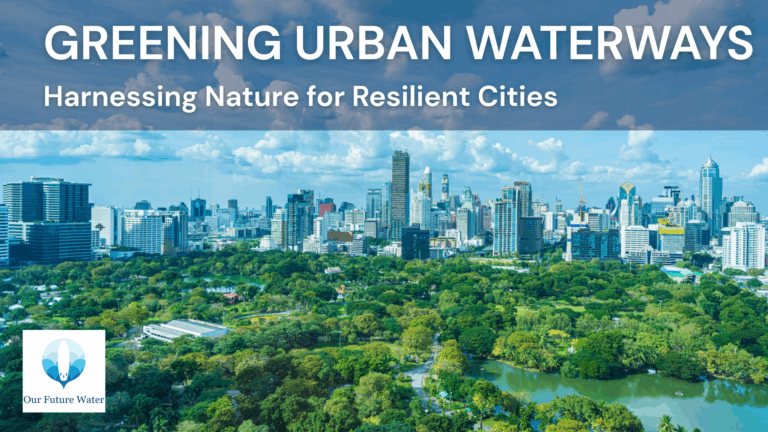
While private plots attenuate regular storm volumes, extreme rainfall events exceed parcel retention thresholds. To prevent localized street flooding, cities deploy multifunctional green infrastructure parks.
- Dynamic Storage Volumes: These assets function as public plazas, amphitheaters, and sports fields during dry periods, but are hydro-dynamically graded to serve as temporary detention basins during 1-in-30 to 1-in-100-year storms.
- Pollution Interception: Integrating bioretention cells, vegetated swales, and sedimentation forebays scrubs heavy metals, total suspended solids (TSS), and urban hydrocarbons prior to deep-well recharge or controlled discharge.
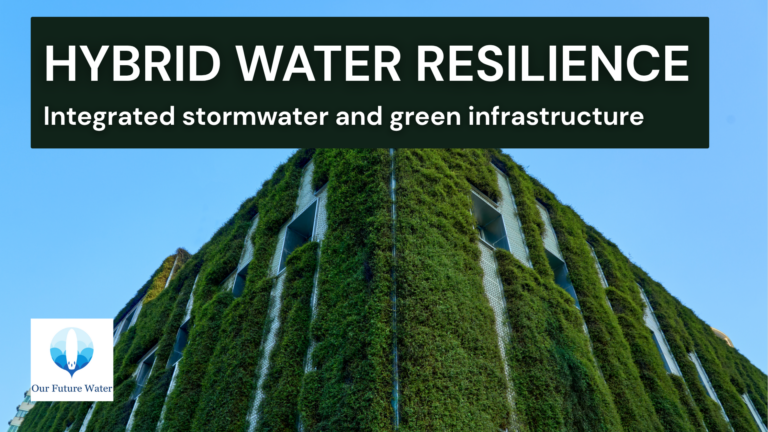
- Cross-Sector Co-Benefits: Unlike single-purpose subterranean storage tanks, civic sponge parks reduce ambient surface temperatures through evapotranspiration, enrich urban biodiversity corridors, and enhance public livability.
Core Governance Imperative: Green infrastructure fails when treated as decorative landscaping subject to discretionary parks budgets. It succeeds when capitalized as an engineered water asset subject to clear hydraulic performance criteria, regulatory compliance, and statutory asset-management frameworks.
Infrastructure Comparison: Grey Systems vs. Integrated NBS
| Performance Metric | Conventional Grey Drainage | Integrated Green Infrastructure |
|---|---|---|
| Hydrological Profile | Rapid collection and rapid peak discharge; elevates downstream flood crests. | Localized infiltration, detention, and retention; flattens and delays hydrograph peaks. |
| Water Quality Impact | Transports nonpoint-source contaminants, debris, and silt directly to surface waters. | Phyto-filtration and soil microbial action capture and degrade nutrients and toxic runoffs. |
| Asset Capital Efficiency | Single-purpose; continuous physical depreciation with escalating repair liabilities. | Multi-utility asset; appreciates ecologically and socially over time as root and canopy structures mature. |
| Climate Microclimate | Impervious hardscaping acts as thermal mass, amplifying the urban heat island effect. | Evaporative cooling and tree canopy mitigate ambient microclimate extremes by 2°C–4°C. |
Institutional Implementation & Utility Financing
The transition to water-sensitive cities requires breaking entrenched municipal silos among stormwater utilities, urban planning authorities, and parks maintenance departments. Three structural interventions align governance with physical delivery:
- Restructure Stormwater Tariffs: Unbundle stormwater management from potable water consumption tariffs. Charge property owners an impervious surface fee while offering substantial credits for developments exceeding baseline Green Factor benchmarks. This creates an ongoing financial incentive for proactive site retention.
- Codify Green Asset Management (GAM): Integrate rain gardens, engineered bioswales, and green roofs into formal municipal asset registers alongside valves and pipes. Allocate dedicated maintenance funding within water utility operating budgets to ensure regular desiltation, filter media renewal, and vegetation audits.
- Standardize Spatial Master Plans: Interconnect parcel-level Green Factor metrics with civic sponge parks using above-ground green corridors, bioswale-lined streetscapes, and daylighted urban waterways, creating a contiguous overland drainage network.
Conclusion: Valuing Water in the Urban Landscape
Sustainable water governance requires viewing stormwater not as an existential threat to be rapidly evacuated, but as a circular urban resource to be captured, cleansed, and harvested. By linking quantifiable private development codes with civic blue-green infrastructure assets, urban leaders transform brittle concrete landscapes into adaptive, climate-resilient sponges that protect populations, restore urban hydrology, and sustain long-term ecological wealth.
Key Questions
What is the difference between conventional grey infrastructure and green infrastructure?
Conventional "grey" infrastructure relies on underground concrete pipes, storm drains, and detention vaults designed to evacuate runoff as quickly as possible away from the urban center. Green infrastructure uses soils, vegetation, permeable surfaces, and biofiltration to intercept, absorb, cleanse, and transpire rainfall at the source, transforming stormwater into a decentralized functional resource.
How does a Green Factor framework work in urban planning?
A Green Factor (or Green Space Factor) is a statutory planning tool that scores proposed site surfaces based on their ecological and hydrological performance. Deep native soil and mature canopy trees receive the highest score multiplier, followed by intensive green roofs, bioswales, and permeable paving. To obtain building permits, developers must achieve a defined score threshold across their parcel footprint.
What is a multifunctional green infrastructure park?
A multifunctional green infrastructure park—often called a "sponge park"—is a civic landscape engineered for dual utility. Under typical weather conditions, it operates as a standard public park, sports ground, or plaza. During severe cloudbursts, its engineered topography safely retains and filters floodwaters, temporarily storing peak surges before releasing them into municipal trunk mains.
Why must stormwater management include private developments?
Private parcels typically comprise 60% or more of total urban surface area. Public investments along roads, sidewalks, and municipal parks cannot capture sufficient runoff on their own to prevent localized street flooding and combined sewer overflows (CSOs). Regulating private parcel absorption distributes detention capacity across the entire drainage basin.
How can cities financially incentivize developers to adopt green infrastructure?
Municipalities can uncouple stormwater utility tariffs from potable water consumption and charge properties based on their total impervious surface area. Developers who incorporate green roofs, bioretention basins, and rainwater harvesting cisterns receive statutory fee rebates, generating ongoing operational savings that offset initial capital costs.
How does green stormwater infrastructure reduce the Urban Heat Island (UHI) effect?
Traditional hardscapes absorb solar radiation and radiate heat back into urban canyons. Green infrastructure counteracts this through tree canopy shading and active evapotranspiration—the release of moisture by plants into the surrounding air—lowering localized ambient temperatures by 2°C to 4°C.