Executive Summary: Urban water security increasingly depends on how cities manage both resource demand and environmental risks. Building benchmarking programs provide the data and governance structures needed to improve water and energy efficiency, while nature-based solutions strengthen stormwater management and climate resilience. Together, these approaches create complementary infrastructure systems that support more reliable services, lower operating costs, and long-term urban sustainability.
In simple terms: Cities can improve water security by combining performance data systems with ecological infrastructure that manages water more efficiently.
This analysis reflects how policymakers, utilities, and urban planners structure integrated water management to balance efficiency, resilience, and sustainability.
Urban water systems are increasingly shaped by the interaction between resource consumption, infrastructure performance, and environmental pressures. As cities pursue stronger water security outcomes, they are also investing in nature-based solutions and data-driven governance tools that improve system visibility, efficiency, and resilience across the built environment.
The Strategic Imperative
The strategic issue is that urban growth, climate variability, and rising resource demands are placing increasing pressure on water and energy systems. Cities require mechanisms that not only improve operational efficiency but also strengthen long-term resilience. Building benchmarking programs provide performance intelligence that helps identify inefficiencies and prioritize investments, while nature-based solutions reduce environmental risks through distributed water management. When designed well, these approaches function as complementary infrastructure assets. One improves decision-making through performance measurement, while the other enhances physical system capacity through ecological processes. Together, they support integrated planning frameworks capable of delivering more sustainable and reliable urban services.
Integrated Performance and Resilience Mechanisms
These systems operate through several reinforcing mechanisms.
- Performance Monitoring: Benchmarking programs collect and compare water and energy consumption data, enabling evidence-based resource management.
- Demand Reduction: Performance assessments identify inefficiencies that can be addressed through operational improvements, retrofits, and conservation measures.
- Distributed Water Management: Nature-based solutions retain, infiltrate, and filter stormwater closer to where rainfall occurs, reducing pressure on centralized infrastructure.
- Risk Mitigation: Ecological infrastructure helps manage flooding, improve water quality, and moderate environmental stresses associated with climate change.
Key Insight: Urban resilience is strengthened when cities treat both information systems and ecological systems as infrastructure assets, enabling better resource allocation while improving environmental performance and adaptive capacity.
Governance, Equity, and Cost Recovery
Effective implementation depends on governance structures that align performance objectives, investment priorities, and public benefits. Benchmarking programs improve transparency by establishing common performance metrics, while nature-based solutions require coordinated planning across land use, water management, and environmental agencies. The challenge is ensuring that investments generate benefits across diverse communities while maintaining financial sustainability. Cost recovery mechanisms, asset management strategies, and equitable access considerations must be integrated into decision-making processes. In practice, successful programs create measurable outcomes that support accountability, strengthen stakeholder confidence, and improve the long-term viability of urban water systems.
| Dimension | Strategic Impact & Outcome |
|---|---|
| Resilience | Reduces exposure to drought, flooding, and infrastructure stress through improved efficiency and distributed water management. |
| Governance | Strengthens transparency, performance accountability, and evidence-based planning across multiple sectors. |
| Investment | Supports targeted capital allocation by identifying efficiency opportunities and enhancing infrastructure performance. |
This matters because infrastructure investment decisions increasingly require measurable outcomes tied to resilience, sustainability, and financial performance. Benchmarking data helps utilities and city authorities prioritize upgrades that deliver the greatest resource savings, while nature-based solutions can provide cost-effective alternatives or complements to conventional infrastructure expansion. The wider implication is that integrated planning reduces long-term system costs while improving service reliability. Technology platforms, asset management frameworks, and climate-informed planning processes are becoming essential tools for coordinating investments across water, energy, land, and environmental systems.
Decision-Maker Application
- Establish Performance Baselines: Develop benchmarking frameworks that measure water and energy performance across building portfolios and infrastructure assets.
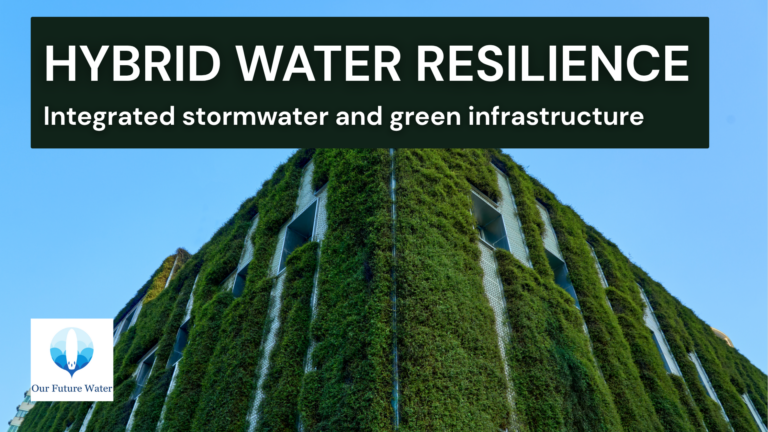
- Integrate Ecological Infrastructure: Incorporate green roofs, wetlands, rain gardens, and urban green spaces into long-term water management strategies.
- Align Investment Planning: Use performance data and resilience objectives to prioritize projects that generate multiple environmental, operational, and financial benefits.
Strategic Context
- Primary Focus: Integrated urban water security and resilience.
- Core Mechanism: Combining performance benchmarking with nature-based infrastructure to improve efficiency and adaptive capacity.
- Global Relevance: Cities worldwide face increasing resource pressures and climate risks that require coordinated governance and infrastructure solutions.
Conclusion
Urban water security increasingly depends on the ability of cities to manage both resource demand and environmental risk through integrated systems. Building benchmarking programs provide the governance infrastructure needed to improve efficiency and guide investment decisions, while nature-based solutions deliver ecological functions that strengthen resilience and environmental performance. When combined within a coordinated planning framework, these approaches create more adaptive urban systems capable of supporting sustainable growth. For policymakers, utilities, investors, and planners, the priority is not choosing between technical and natural solutions, but integrating both to achieve stronger long-term water security outcomes.
Key Questions
What is a building benchmarking program?
A building benchmarking program collects, compares, and evaluates water and energy performance data across buildings to identify inefficiencies, support resource management, and guide efficiency improvements.
How do benchmarking programs support urban water security?
Benchmarking programs help reduce water and energy demand by identifying opportunities for efficiency improvements, lowering pressure on municipal infrastructure, and enabling evidence-based planning and investment decisions.
What are Nature-Based Solutions in urban water management?
Nature-Based Solutions are ecological infrastructure measures such as green roofs, wetlands, rain gardens, parks, and urban forests that use natural processes to manage water, improve environmental quality, and enhance resilience.
How do Nature-Based Solutions improve urban resilience?
They reduce flood risks, improve water quality, support biodiversity, mitigate urban heat, and provide adaptive capacity against climate-related impacts while complementing conventional infrastructure systems.
Why is integrating benchmarking programs and Nature-Based Solutions important?
Combining data-driven demand management with ecological infrastructure enables cities to improve efficiency, reduce environmental pressures, strengthen resilience, and optimize long-term infrastructure performance.
What should decision-makers prioritize when implementing these approaches?
Decision-makers should establish performance measurement systems, integrate nature-based infrastructure into planning processes, and align investments with resilience, sustainability, and resource-efficiency objectives.