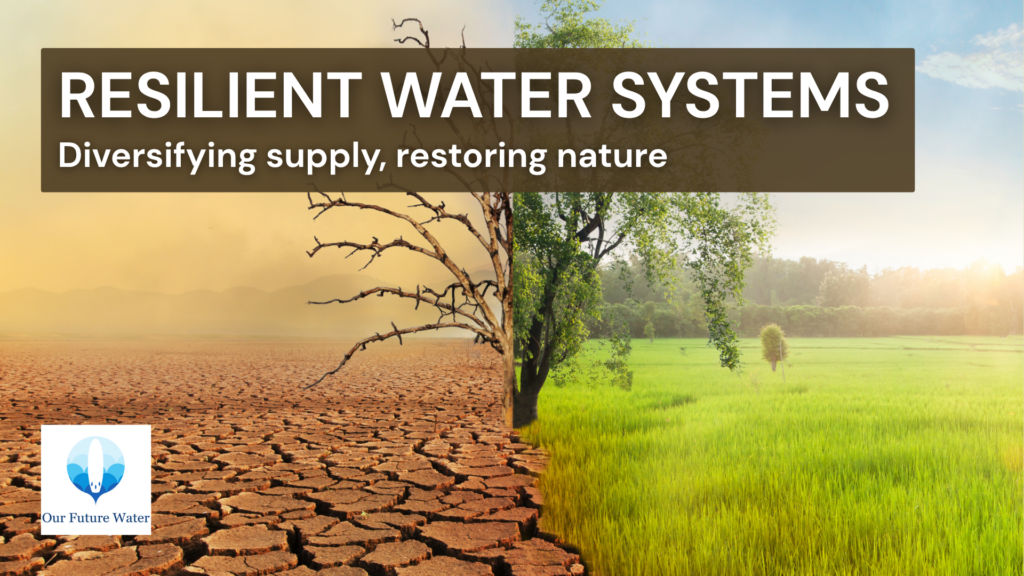
Executive Summary: Climate change is increasing pressure on the reliability, quality, and governance of water resources, requiring infrastructure systems that strengthen resilience across multiple fronts. Integrating alternative water sources with nature-based solutions creates diversified, adaptive water systems that improve supply security, environmental performance, and long-term sustainability. The strategic priority is to combine engineered and ecological infrastructure within coordinated governance and investment frameworks.
In simple terms: Combining alternative water supplies with nature-based infrastructure helps cities improve water security, resilience, and environmental sustainability.
This analysis reflects how governments, utilities, and infrastructure planners structure climate-resilient water systems to balance supply reliability, environmental protection, and long-term economic sustainability.
Climate resilience increasingly depends on integrating both engineered and natural infrastructure into water planning. As explored across Water Security and Nature-Based Solutions, diversified supply systems and ecological assets provide complementary functions that strengthen urban resilience while supporting sustainable water management.
The Strategic Imperative
The strategic issue is ensuring that water systems remain reliable under increasing climate uncertainty. Traditional dependence on surface water and groundwater alone exposes communities to drought, flooding, changing precipitation patterns, and declining water quality. In practice, resilient systems diversify supply while strengthening the ecological processes that regulate urban water cycles. Alternative water sources improve operational flexibility by expanding available resources, while nature-based solutions enhance infiltration, storage, filtration, and climate regulation. This matters because integrating these complementary approaches reduces systemic risk, strengthens adaptive capacity, and enables infrastructure investments that continue delivering value under changing environmental conditions.
Complementary Infrastructure Mechanisms
Both engineered and ecological systems strengthen resilience through different but mutually reinforcing functions.
- Supply Diversification: Stormwater harvesting, wastewater recycling, desalination, rainwater harvesting, and managed aquifer recharge reduce dependence on single water sources.
- Natural Water Regulation: Urban forests, wetlands, green spaces, and restored ecosystems improve infiltration, filtration, water retention, and groundwater recharge.
- Environmental Protection: Reduced pollutant discharges and improved ecosystem health strengthen water quality while protecting freshwater and coastal environments.
- Adaptive Capacity: Combining engineered infrastructure with ecological assets creates flexible systems capable of responding to climate variability and future uncertainty.
Key Insight: Long-term water resilience depends not on replacing conventional infrastructure but on integrating alternative water sources and nature-based systems into coordinated planning, governance, and investment strategies that deliver multiple benefits simultaneously.
Governance, Equity, and Cost Recovery
The challenge is designing governance frameworks that support integrated infrastructure while maintaining affordability and equitable access to water services. Successful implementation requires coordination across utilities, environmental agencies, land-use planners, and infrastructure investors. Cost recovery mechanisms should recognize the broader public value delivered by diversified water supplies and ecosystem services rather than evaluating individual assets in isolation. When designed well, governance arrangements improve investment certainty, strengthen operational performance, and ensure that resilience benefits are distributed across communities while supporting long-term financial sustainability.
| Dimension | Strategic Impact & Outcome |
|---|---|
| Resilience | Diversified water portfolios reduce climate-related supply risks while improving operational flexibility. |
| Governance | Integrated planning aligns utilities, environmental management, and urban development objectives. |
| Investment | Balanced infrastructure portfolios generate long-term value by combining engineered assets with ecosystem services. |
Infrastructure decisions increasingly require integrated financial, technological, and policy approaches that recognize water systems as interconnected networks rather than isolated assets. Investment strategies should evaluate lifecycle performance, operational resilience, environmental outcomes, and community benefits together. Digital monitoring, asset management, adaptive planning, and performance-based governance strengthen both engineered infrastructure and nature-based systems. The wider implication is that resilient water infrastructure depends on institutional coordination as much as engineering capability, enabling decision-makers to optimize investments across multiple sectors while improving long-term sustainability.
Decision-Maker Application
- Integrate Planning: Develop infrastructure strategies that combine conventional assets, alternative water sources, and ecological systems within unified planning frameworks.
- Strengthen Governance: Coordinate policies across utilities, environmental agencies, and urban planning authorities to improve implementation and long-term performance.
- Prioritize Resilience Investment: Evaluate projects using financial, environmental, operational, and climate resilience outcomes rather than single-sector performance measures.
Strategic Context
- Primary Focus: Climate-resilient water infrastructure.
- Core Mechanism: Integration of alternative water sources with nature-based solutions.
- Global Relevance: Climate change requires diversified, adaptive infrastructure that strengthens water security while improving environmental and economic resilience.
Conclusion
Climate resilience increasingly depends on combining engineered innovation with ecological infrastructure rather than relying on either approach independently. Alternative water sources improve supply reliability and operational flexibility, while nature-based solutions strengthen ecosystem functions that support healthier and more resilient urban environments. Together they create integrated infrastructure systems capable of reducing climate risks, improving environmental performance, and supporting sustainable economic development. For policymakers, utilities, and infrastructure planners, the strategic priority is establishing governance and investment frameworks that enable these complementary assets to operate as a coordinated water resilience system.
Key Questions
What are alternative water sources?
Alternative water sources include recycled wastewater, stormwater, rainwater harvesting, desalinated seawater, and managed aquifer recharge. They diversify water supplies and reduce dependence on traditional surface water and groundwater resources.
How do nature-based solutions improve water resilience?
Nature-based solutions such as wetlands, urban forests, green spaces, and restored ecosystems improve water infiltration, filtration, storage, and groundwater recharge. They also help reduce flooding, improve water quality, and support healthy ecosystems.
Why is integrating engineered and natural infrastructure important?
Combining engineered infrastructure with ecological systems creates more flexible and resilient water networks. This integrated approach improves supply reliability, reduces climate risks, enhances environmental performance, and supports long-term sustainability.
What role does governance play in climate-resilient water infrastructure?
Effective governance coordinates utilities, environmental agencies, urban planners, and investors to support integrated water management. Strong governance frameworks improve project delivery, investment certainty, and equitable access to water services.
How do alternative water sources support climate adaptation?
Alternative water sources reduce reliance on a single supply, making water systems more resilient to drought, changing rainfall patterns, and other climate-related challenges. Diversified water portfolios provide greater operational flexibility during extreme weather events.
What are the long-term benefits of integrated water infrastructure?
Integrated water infrastructure improves water security, strengthens climate resilience, protects ecosystems, and delivers long-term economic value. It also supports sustainable urban development by combining engineering solutions with natural ecosystem services.